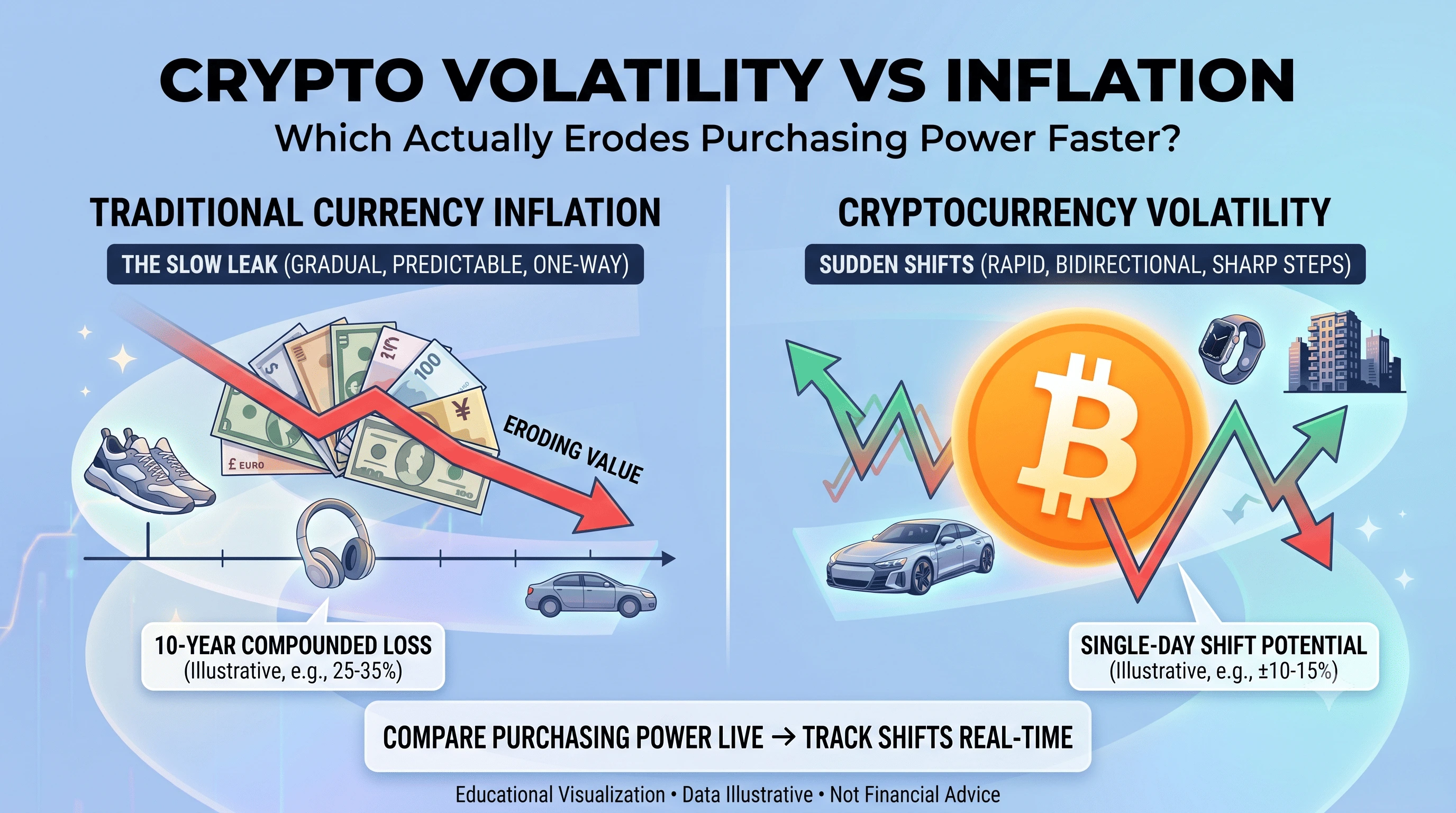
Inflation and crypto volatility both do the same basic thing — they change how much your money is actually worth over time — but they work at completely different speeds and for completely different reasons.
How inflation erodes purchasing power
Inflation is slow and usually predictable. A currency losing 3–4% of its value per year doesn't feel dramatic day to day, but compounded over a decade it adds up. Inflation erosion is a slow leak — it rarely makes headlines on any single day, but the trend line points predominantly in one direction: down.
How crypto volatility erodes — and creates — purchasing power
Cryptocurrency volatility is fast, unpredictable, and bidirectional. A 10–15% move in a single day can alter what a fixed crypto holding buys overnight. This represents a series of sudden pressure changes that can expand or contract buying power within short periods.
Track Volatility Live
See real-time price changes pull live into actual merchandise values.
Test Live Cart →Putting them on the same scale
Holding cash over a decade typically results in a gradual loss of real purchasing power due to inflation. Holding crypto over a similar period exposes holdings to far larger swings along the way — including periods of rapid growth and sharp pullbacks.
Why this is easier to feel than to calculate
Fixing a real-world purchase in your mind (like a car or housing down payment) illustrates the distinction: cash purchasing power trends steadily downward over time, while crypto purchasing power moves in sharp, multi-directional steps.
See the crypto side live
The SpendCoins simulator shows how a fixed crypto balance converts to real-world items today. Check back periodically to observe the volatility side of this comparison with live data.